Ondekoza – Fujiyama

A MOUNTAIN OF LEATHER, WOOD AND BREATH
There are records one puts on, and there are those for which one aligns the listening room. Ondekoza’s “Fujiyama” belongs to the second kind: an event that in a tenement block is logged as a disturbance of the peace, but in a well-built listening room as a spectacle of nature. The drum ensemble, founded in 1969 on the island of Sado, recorded the album in April 1997 in Tokyo and Yamanashi, entirely analogue and on tape. Now it appears as a UHQLP edition from Modern Audio, cut at half speed at Abbey Road Studios, pressed on 180-gram virgin vinyl and limited to a thousand numbered copies. The expectation of this pressing is directed less at sheer volume than at the question of whether the quiet, the leather and the air in between have found their way into the groove.
TECHNICAL DATA
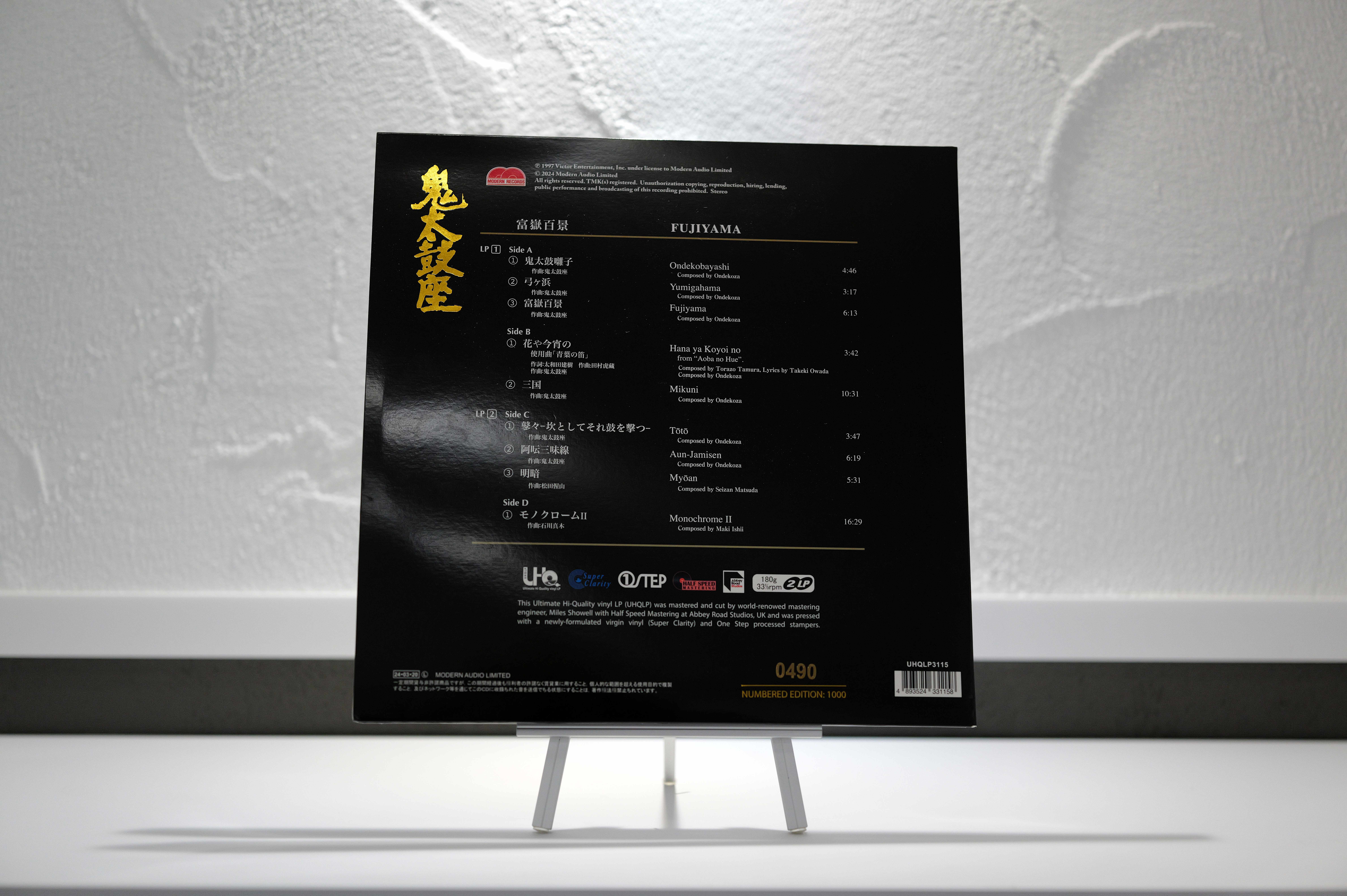
Artist / Album: Ondekoza – Fujiyama (富嶽百景 / Fugaku Hyakkei)
Label: Modern Audio Ltd (UHQLP series); original release: JVC / Victor Entertainment
Catalogue number: UHQLP3115 (barcode 4893524331158)
Year of original release: 1997
Year of release of this pressing: 2024
Pressing plant: not known (according to the label: press of German make under the supervision of the AQCD Technology Company)
Producer: Isamu Senda, Shigeru Kurokoji, Den Tagayasu (original production 1997)
Mixing: Hideo Takada (recording and mix 1997, Victor Aoyama Studio 202, Tokyo)
Mastering: Miles Showell, half-speed mastering, Abbey Road Studios, London
Vinyl weight: 180 g
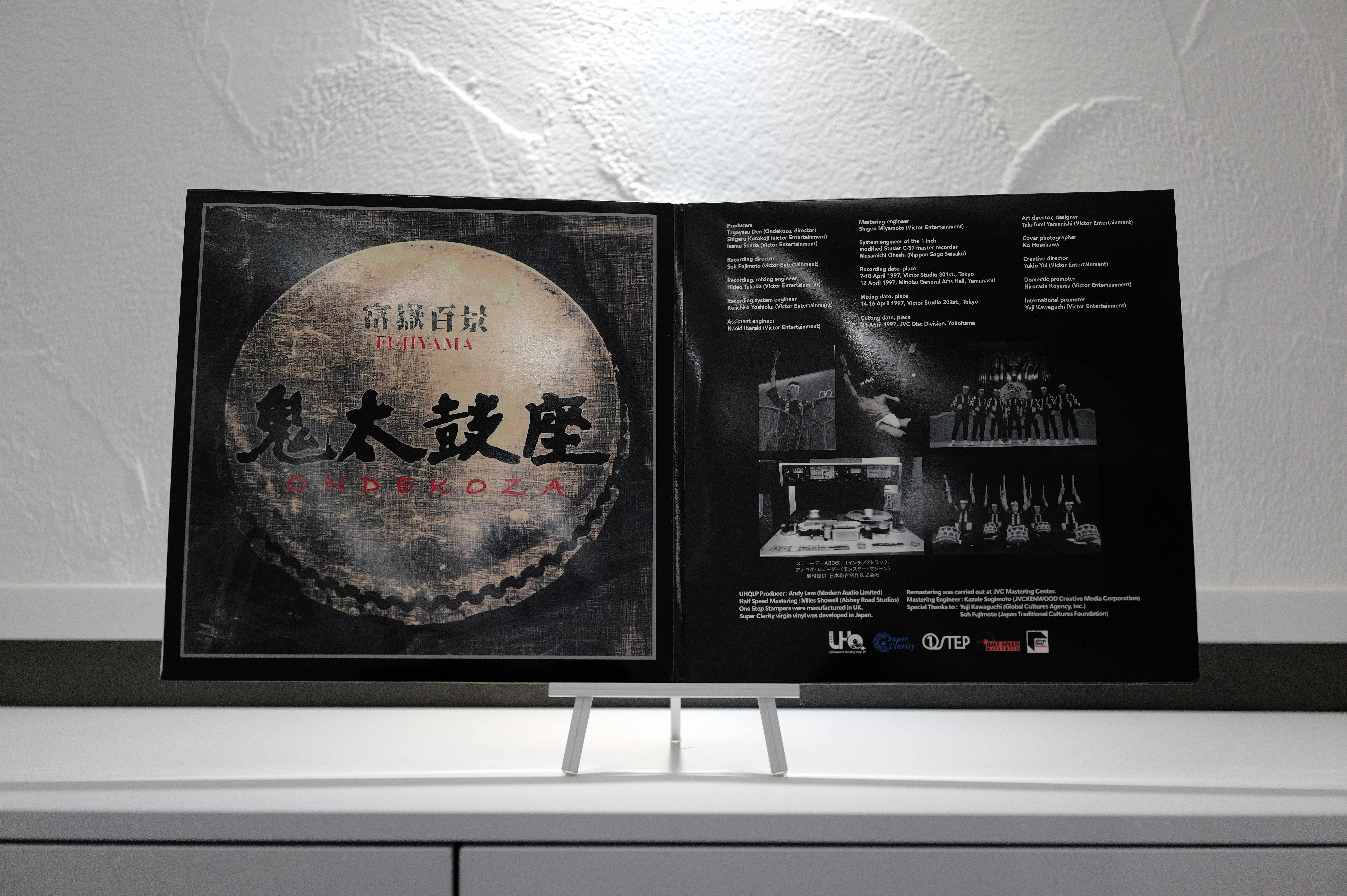
Format: Double LP, 33⅓ rpm, stereo, gatefold; Super Clarity virgin vinyl, one-step process; numbered, limited to 1,000 copies; with booklet (Japanese only), photographs, mastering certificate and obi strip
RRP: €144.00 (figure supplied by Sieveking Sound)
ARTIST AND ALBUM IN HISTORICAL CONTEXT
When Den Tagayasu gathered young women and men around him on Sado in 1969, he was not a taiko player himself. He lifted the drum out of the village festival cycle and put it on the stage. The members lived together in an old schoolhouse, studied not only taiko but also shamisen, koto, min’yō and dance, and the day began with a run before breakfast. In 1975 the group made its debut in North America; in Boston it played at the finish of the marathon it had previously run itself. After the split of 1981, from which Kodō emerged on Sado, Den carried on the name Ondekoza with new members.
“Fujiyama”, in the original “Fugaku Hyakkei” – One Hundred Views of Mount Fuji, a title also borne by Hokusai’s famous woodblock work –, was made in April 1997 at Victor Aoyama Studio in Tokyo and in the Minobu General Arts Hall in Yamanashi. Credited as producers are Isamu Senda, Shigeru Kurokoji and Den himself, who died in a traffic accident in April 2001. Recording was on a 24-track machine of the type Studer A820, mixed on a 1-inch Studer C37. Myles Astor honoured the reissue in the 2025 Writers’ Choice Awards of Positive Feedback.
THIS EDITION
The edition was released on 20 March 2024 by Modern Audio Ltd. in the Ultimate Hi-Quality LP series. Miles Showell cut the lacquers at half speed at Abbey Road Studios: the cutting lathe runs at half the rotational speed and gives the cutting stylus twice as much time for the finest modulations. Pressing was on newly formulated virgin vinyl named Super Clarity, and in the one-step process, in which the first stamper galvanised directly from the lacquer – the so-called father – presses the records, instead of the usual three-step galvanic process. The edition is limited to 1,000 numbered copies. On vinyl, “Fujiyama” had previously already appeared in 2021 on Enrich Music.

PACKAGING
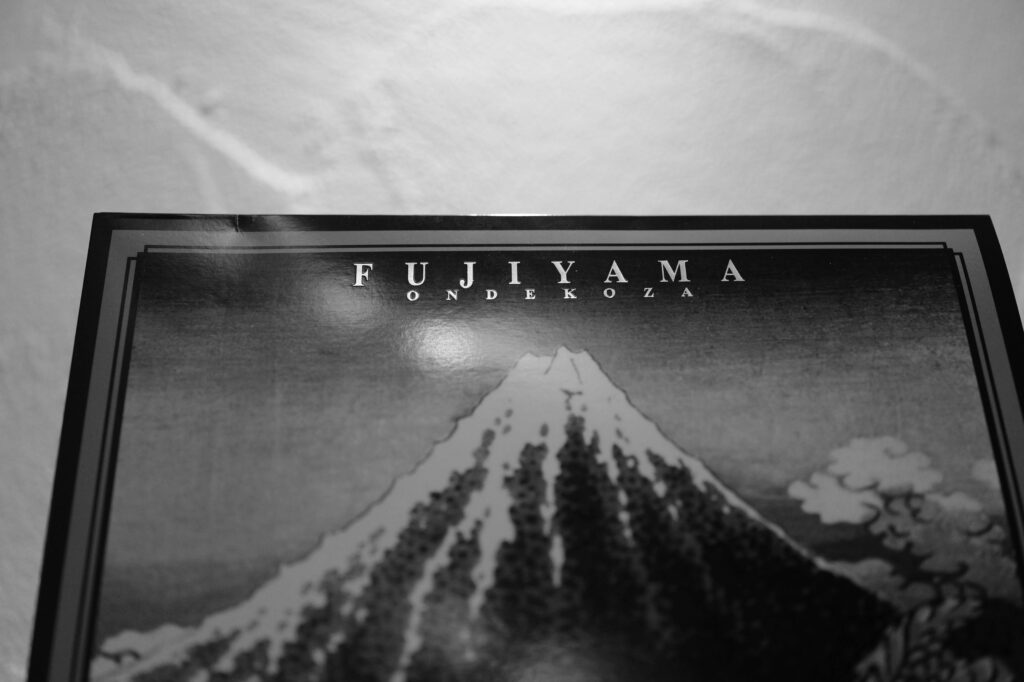
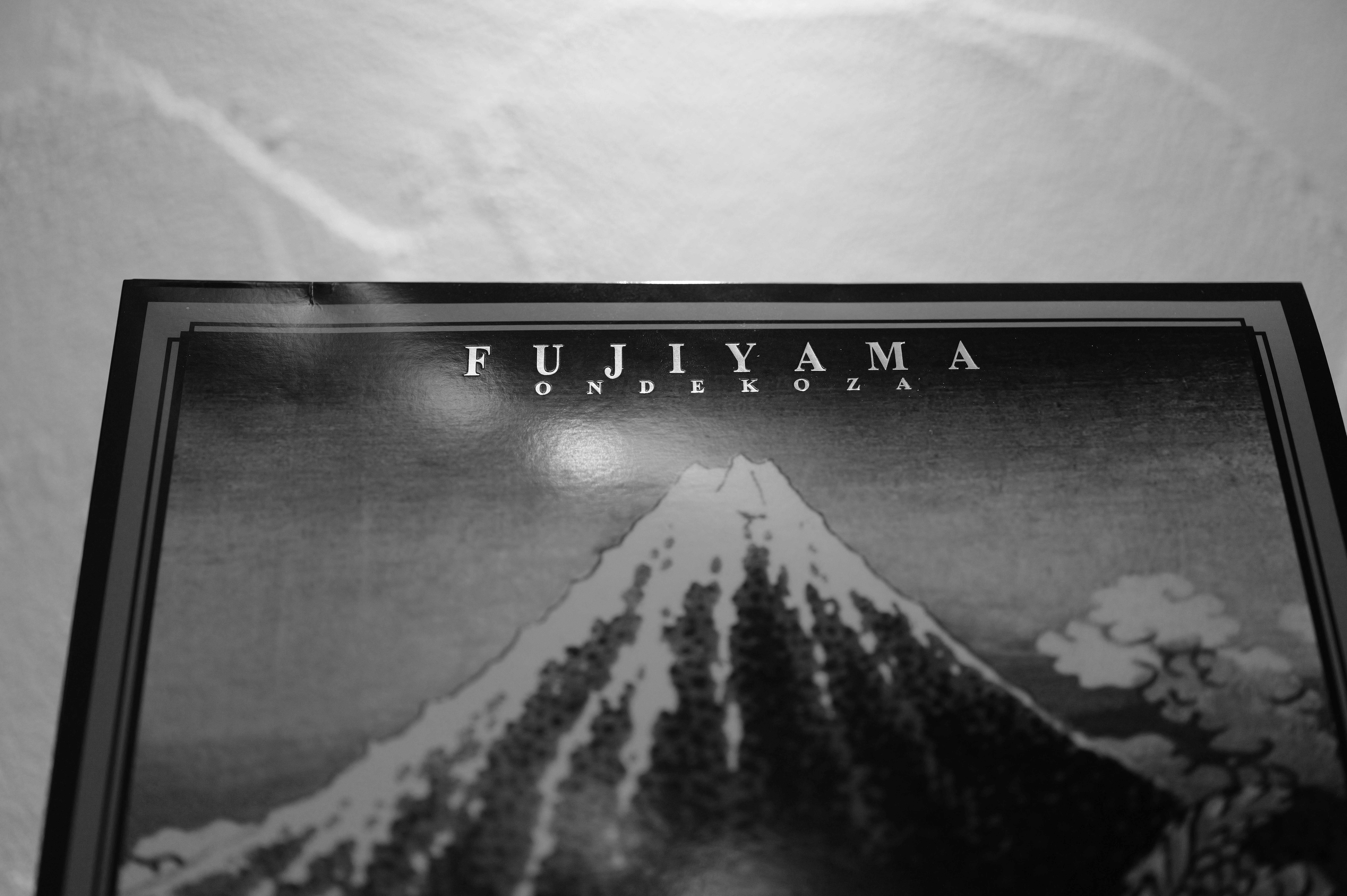
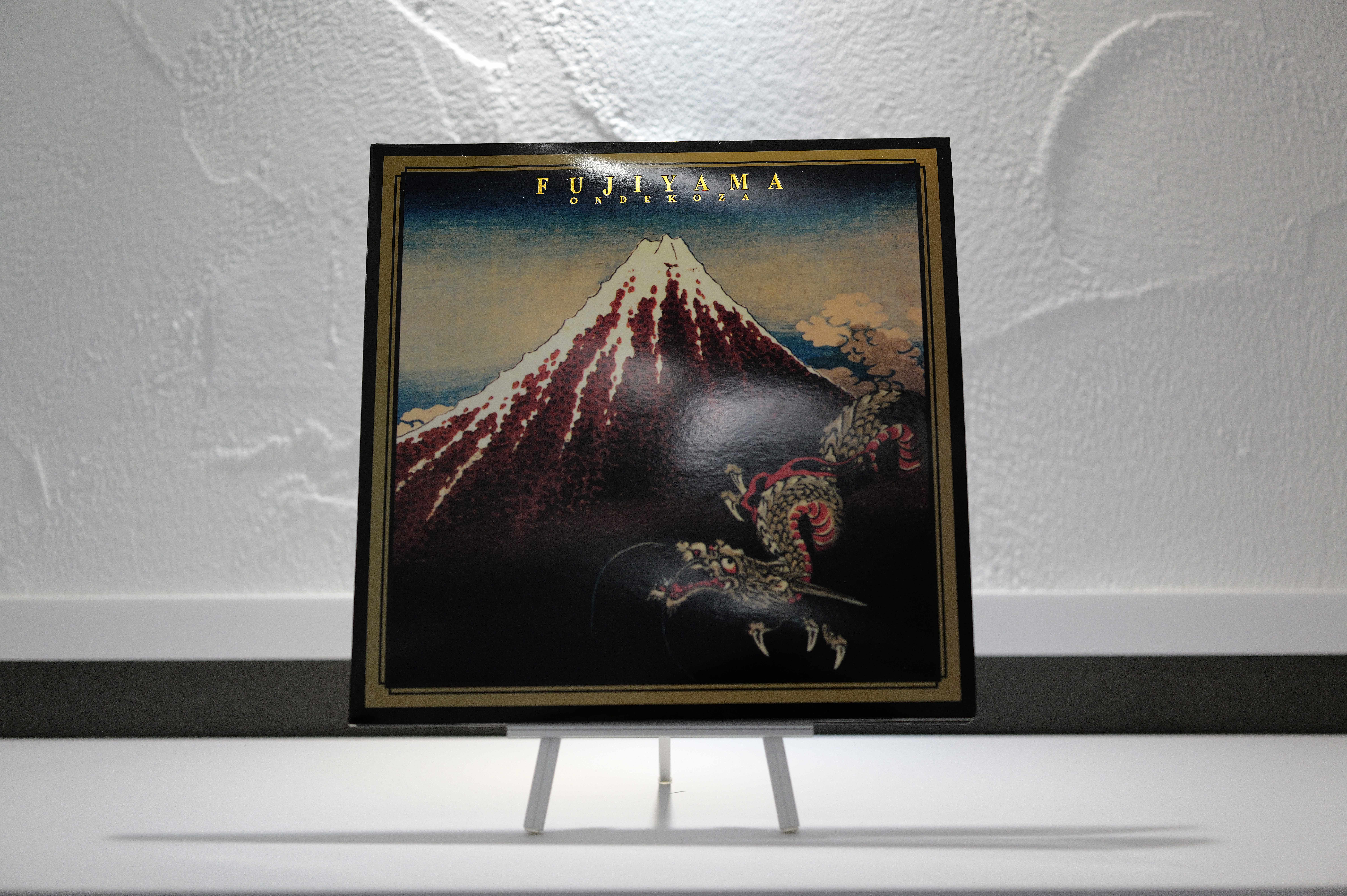
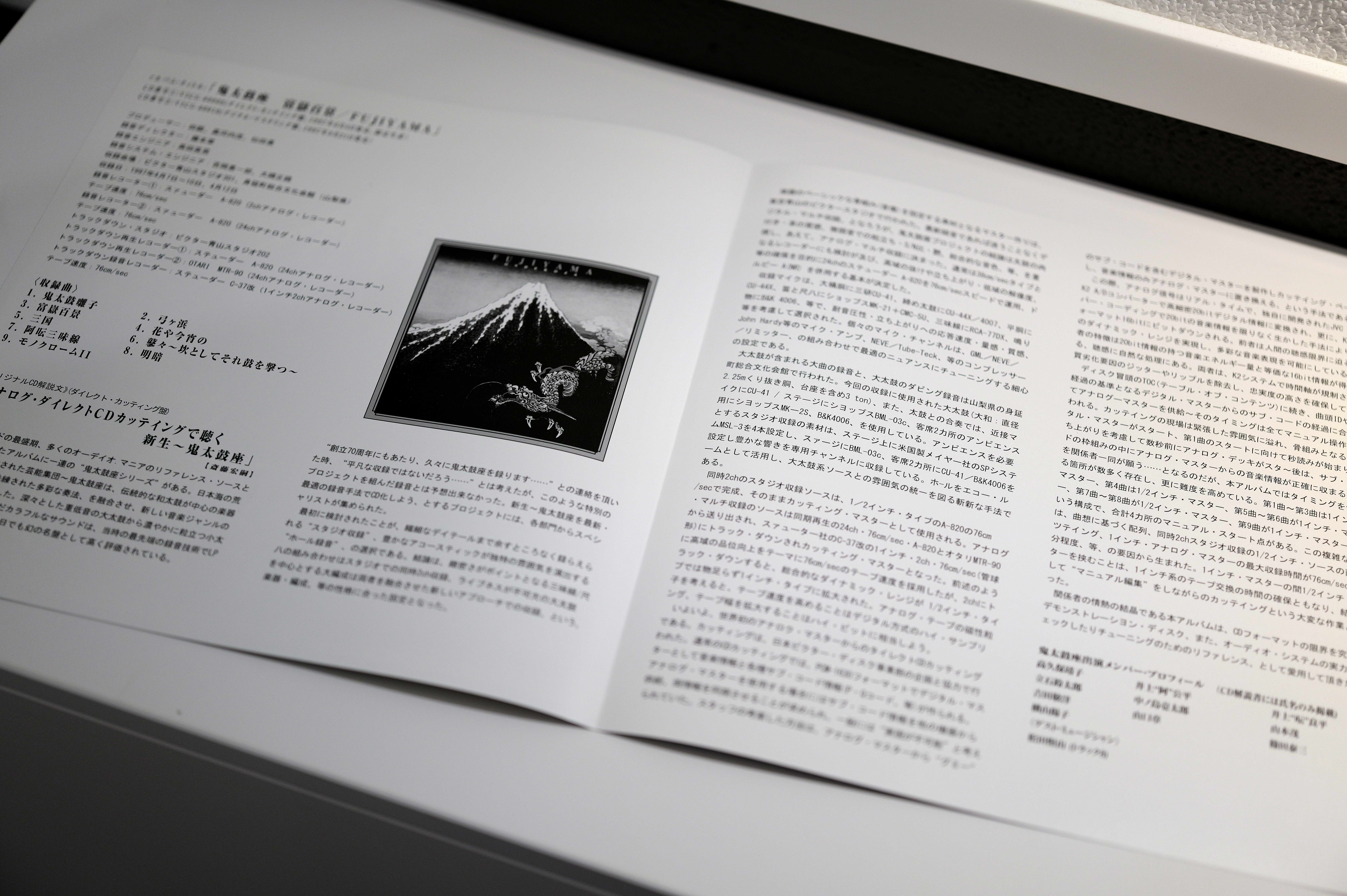
The gatefold cover is of great beauty and gives the double LP the frame a work of this weight demands; both records receive the same presentation within it. The inner sleeve is lined, as befits vinyl of this rank, and flawlessly executed. A booklet is included and is impeccably made, though written exclusively in Japanese; whoever cannot read it leafs through and looks, a renunciation we bear with composure, for here the point is to listen in any case. Photographs are also included, although in number there might gladly have been more. As special extras, a mastering certificate and an obi strip are added, both in immaculate condition; the latter belongs to the Japanese origin of this edition as the frame belongs to the picture. The certificate puts something written into the collector’s hand, the strip delivers what a Japanese edition promises in collector’s aesthetics. A printed inner sleeve, on the other hand, is unfortunately not part of the package.

MATERIAL QUALITY
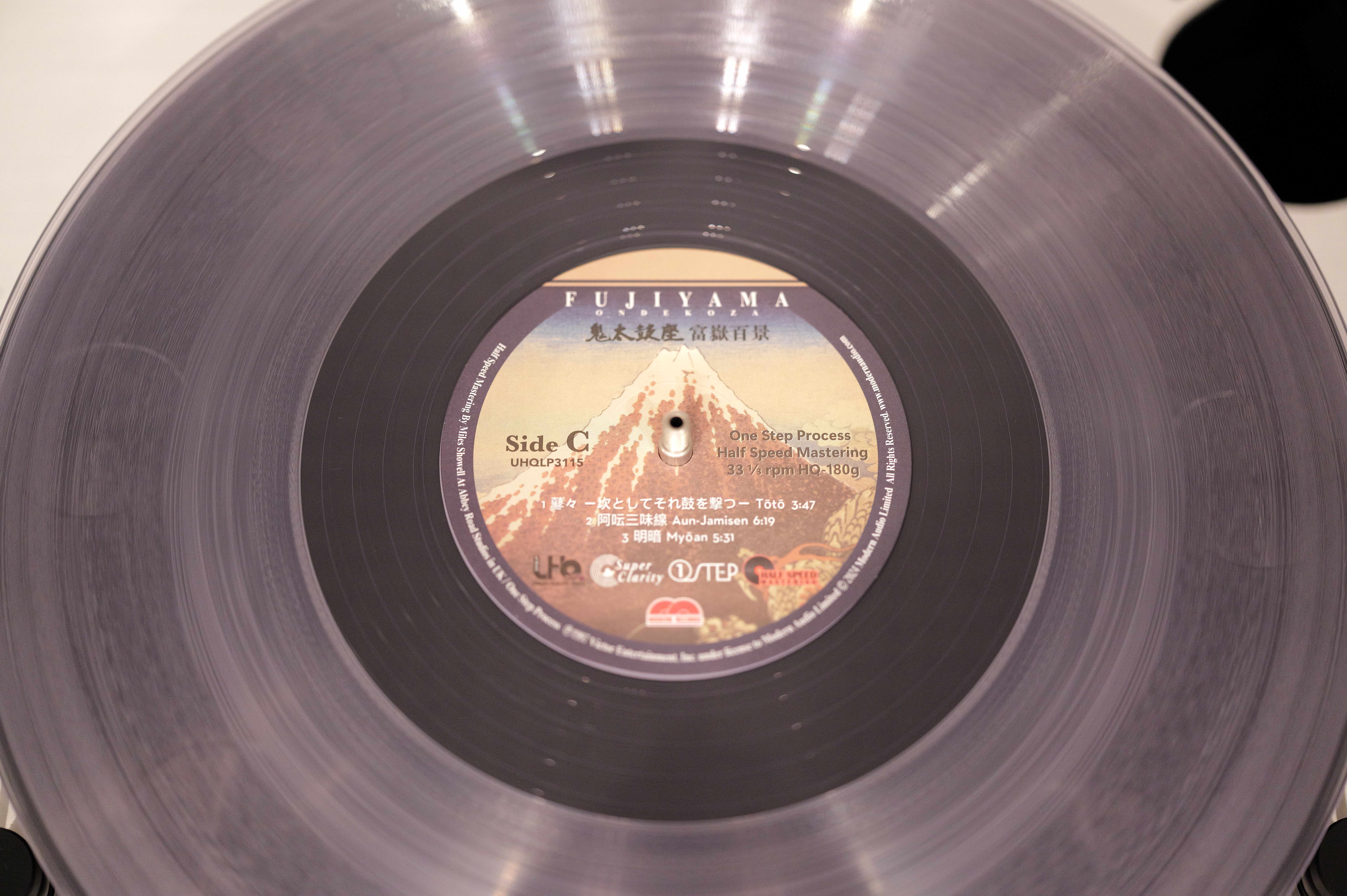
With the vinyl itself, a picture with bright and less bright spots emerges. The two records lie flat on the platter, which is no matter of course with a double LP with side lengths of up to a good sixteen and a half minutes, and they present themselves in clean condition. The centre hole, the calling card of every pressing, has the right size; as to centring, the verdict is good but not flawless, for the cartridge sways slightly sideways during playback, a sign of a minimally off-centre bore, which one would rather not encounter in an object of this price class. The edges have turned out somewhat sharp; from an edition of this ambition we would have expected more careful execution here. Finally, faint background noise can be heard, above all where the music turns quiet, and thus at the very place where, according to the label, the one-step process is supposed to redeem its promise of the lowest surface noise. There is room for improvement here: whoever enters with one-step may also be measured at the groove, and at this point the measurement turns out sober. Edges, centring and background noise are the points at which this edition departs from the ideal; everything else about the vinyl ranges between good and flawless. It is a marginal remark on an otherwise very carefully made artefact, but it belongs in the report.
SOUND QUALITY
The first impression is a physical one, and it comes without advance notice. In track 1, Ondekobayashi, and in track 3, the title piece Fujiyama, a drum of monumental dimensions makes itself heard, carried by a bass foundation that one hears less than experiences on one’s own body. The suddenness with which it sets in has consequences: loudspeaker drivers can reach their load limit and suffer damage, in the worst case irreparable. Whoever puts the record on for the first time chooses the level cautiously, knows the power handling of their loudspeakers and approaches with the volume control in small steps. By its own claim Ondekoza plays at the limit of what is physically possible, and the dynamics of this pressing pass this claim on to the listener undiminished.
Every instrument receives the space it needs to spread out: the mighty drums as well as the small ones, whose skins are tensioned to the limit before every performance, a task that demands the strength of two members. The source material offers ample reserves for this, since recording was on a 24-track machine of the type Studer A820 and mixing on a 1-inch Studer C37; the half-speed cut continues this path without visible strain.
The localisation of the individual players succeeds in both dimensions, in the width of the stage as in its depth, and with a precision that amazes. Whoever knows that Den Tagayasu lifted the drum out of the village festival cycle onto the stage hears here a stage that does justice to this history: it is large enough for an ensemble that cannot be made small.
The room seems wide, its reverberation authentic, and neither ever runs the risk of covering the direct signal. The hall accompanies the music rather than pushing itself in front of it, which suits a recording made partly in the Minobu General Arts Hall, a concert hall, and partly in Victor Aoyama Studio in Tokyo; the studio days lay between 7 and 10 April 1997, the day in the hall on 12 April.
Sonically everything fits harmoniously and immaculately cleanly into the music. The bass range is taken to regions that demand a good deal of the playback system, and the treble follows it at the same level; no frequency range has to hide behind another. A single word suffices for us: perfect.
The dramaturgy of the record sides sets the playback different tasks. Side A leads from Ondekobayashi via Yumigahama to the title piece Fujiyama, Side B joins Hana ya koyoi no with the long Mikuni, Side C strings Toto, Aun-Jamisen and Myoan into a sequence of shorter pieces, and Side D belongs to Monochrome II alone, a good sixteen and a half minutes long. If the fourth side demands stamina, the others demand agility from piece to piece.
As an overall picture, what remains is a listening experience of rare magnitude: a pressing in which nothing is missing and nothing pushes forward, and a recording that one treats with respect for its dynamics and with pleasure for its clarity.
MUSICAL CONTEXT
In the group’s oeuvre, which began on record with “Ondekoza” (1977) and “Ondekoza Live” (1986), “Fujiyama” is an album of summation. It arose between the three-year running and concert tour of the United States, 1990 to 1993, which ended at Carnegie Hall, and the marathon tour through China begun in 1998. Original compositions stand beside works by others: Hana ya koyoi no lists Torazo Tamura as composer and Takeki Owada as lyricist, Myoan comes from Seizan Matsuda, who was to lead Ondekoza after Den’s death, and Monochrome II from Maki Ishii. The latter, premiered by Ondekoza in Berlin in 1976 as a commission, combines taiko tradition with avant-garde procedures such as aleatoricism and counts as a classic of the taiko repertoire; Kodō brings it to the stage again in 2026, fifty years after its premiere. In the genre of drum ensembles the album thus asserts a position of its own: that of composition, which knows silence alongside power.
ASSESSMENT
In the overall picture of this release the weight lies clearly on the sound: in all the disciplines examined – dynamics, resolution, imaging, spatiality, tonality and overall impression – the pressing reaches the level of the flawless. The packaging convinces across the board: the gatefold is of great beauty, the lined inner sleeve impeccable, booklet, photographs, mastering certificate and obi strip round off the picture exemplarily; the Japanese-only booklet and the modest number of photographs as well as the missing printed inner sleeve hardly count in the verdict. In the material, flatness, cleanliness and size of the centre hole show impeccable workmanship, while the centring turns out good but not flawless and the sharp edges as well as the faint background noise in quiet music fall short of what one expects of an edition of this ambition. Thus emerges the picture of an edition whose sonic substance clearly exceeds its craft weaknesses.
CONCLUSION AND PURCHASE RECOMMENDATION
This pressing is worthwhile for all whose system can do more than is asked of it in everyday use, and who are prepared to prove this to it seriously once. Whoever understands taiko as sound art finds here an edition that unites dynamics, resolution, space and tonal colour at the highest level. Whoever expects a booklet in a Western language or flawlessly silent grooves should know the stated limitations; whoever runs loudspeakers of limited power handling begins with the utmost caution. At a recommended retail price of 144 euros and a run of only a thousand copies, the recommendation nevertheless turns out clear: grab it while the numbers last – we, at any rate, would rather not have to explain why we hesitated.